- Technology news
- 13 min read
Website Development Companies in Egypt
Learn about the most important services provided by web development companies in Egypt, the stages of website development, factors that affect the cost, along with tips to help you choose the right company for your project.
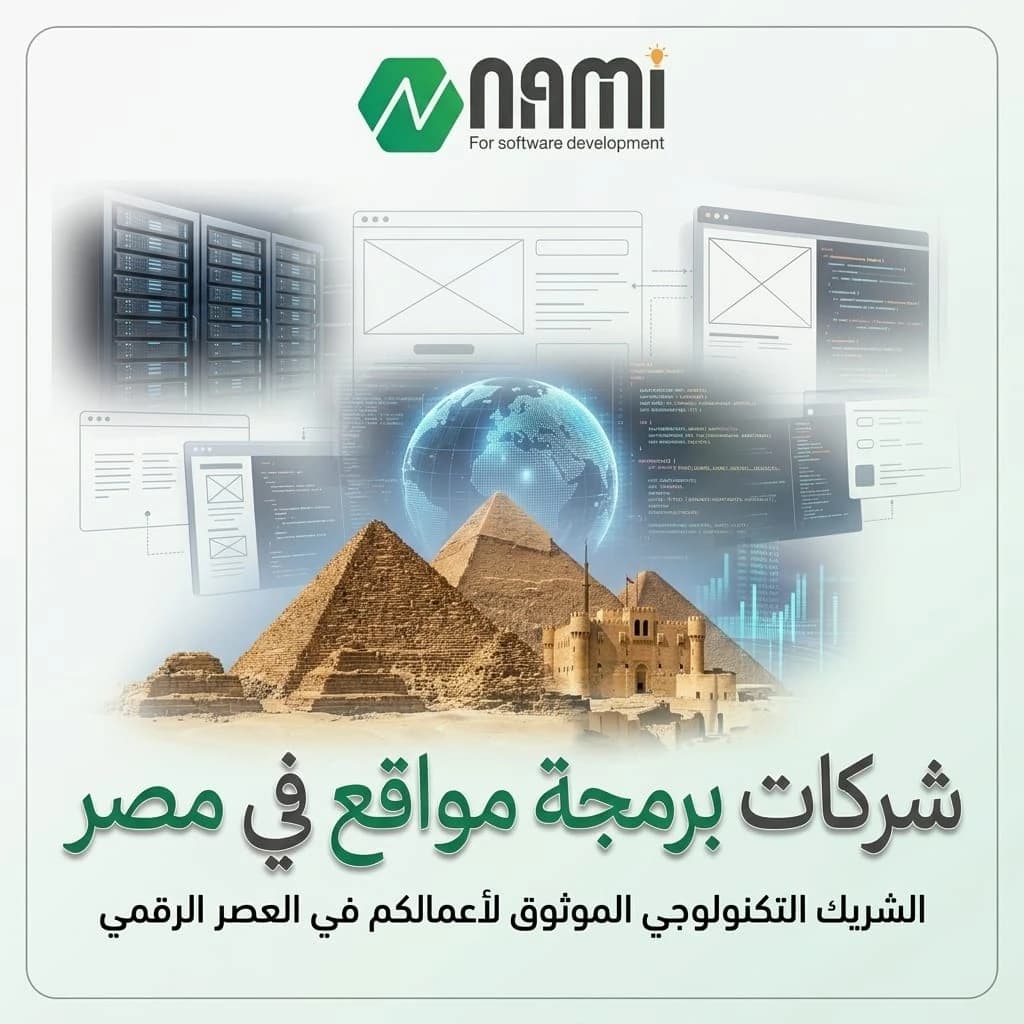
Website development companies in Egypt have become important partners for businesses and project owners looking to build a strong digital presence and present their services to customers professionally. A website helps showcase products and services, facilitate communication, support sales, and organize digital operations.
A website’s success depends on choosing a company with technical expertise that understands the project’s needs and can develop solutions that meet its current goals and future plans.
In this article, we explore the criteria for choosing the best website development companies in Egypt, the types of websites and digital systems available, the implementation stages, and the factors affecting cost and development time. We also look at Nami’s website development and digital solutions services and how they can help you choose the right solution for your project.
Best Website Development Companies in Egypt and How to Choose the Right Company
Choosing a website development company in Egypt depends on its technical expertise, quality of execution, and range of solutions. Nami is one of the distinguished companies in programming and digital solutions, combining website development, interface design, mobile applications, technical consulting, cloud services, and digital marketing to provide integrated solutions that help businesses strengthen their digital presence and achieve their goals. Discover Nami’s services and explore the solutions that can take your project to a new level of digital development.
Key criteria for evaluating website development companies include:
-
Experience and portfolio: Review previous projects and how relevant they are to your business.
-
Technical expertise: Make sure the team can implement the required features and functionality.
-
Design quality: Choose a company that prioritizes ease of use and content organization, not just appearance.
-
Performance and security: Make sure the company focuses on website speed and data protection.
-
Clear agreements: Define the scope of work, cost, timeline, and rights related to the website.
-
Post-launch support: Understand the available maintenance and update services and how technical issues are handled.
Comparing these criteria helps you choose a company that suits your project’s needs and get the most value from your investment in a website.
Types of Websites and Systems Businesses Need
Website types vary according to the nature of the business and the goals it aims to achieve. Therefore, the website’s primary purpose should be identified before choosing how to develop it.
The main types include:
-
Corporate websites: Present company information, services, and contact details, making them suitable for organizations looking to strengthen their digital presence.
-
E-commerce stores: Allow businesses to display products, receive orders, and manage sales and payment processes.
-
Service and booking websites: Help customers explore services, submit requests, or book appointments.
-
Digital platforms: Connect users with service providers or allow multiple operations to be managed through a single platform.
-
Administrative systems: Help businesses organize data and internal operations through customized functions and dashboards.
-
Content websites: Suit organizations that regularly publish articles, news, and educational materials.
Nami’s website development services include solutions for websites and online stores, as well as the development of interfaces and features tailored to each project’s requirements.
Defining Project Requirements Before Website Development
Defining project requirements helps you choose the right technical solution and avoid unnecessary features or repeated changes during development.
Before development begins, identify the following elements:
-
Website objective: Such as showcasing services, selling products, or accepting bookings.
-
Target audience: Identify users, their needs, and how they interact with the website.
-
Required pages: Such as Home, Services, About Us, and Contact.
-
Core functionality: Such as request forms, search, user registration, and online payments.
-
External integrations: Determine whether the website needs to connect with payment, shipping, or customer management systems.
-
Scalability: Consider the features the project may need in the future.
-
Budget and timeline: Define available resources and priorities before development begins.
Nami’s technical consulting services help assess project requirements and identify suitable technical solutions, supporting better planning before implementation begins.
Ready-Made vs. Custom Website Development
The choice between ready-made and custom website development depends on the nature of the project, the required functionality, the available budget, and the need for future expansion.
Ready-Made Development
This option suits projects that need to launch a website using an existing system or template that can be modified to meet specific requirements.
Key advantages include:
-
Reducing launch time in many cases.
-
Using ready-made features for managing content or products.
-
Lowering initial costs for some types of projects.
-
Making website management easier when using a suitable system.
However, ready-made solutions may be limited when a project requires unavailable features or complex customizations.
Custom Development
Custom development involves building a website or system according to the project’s specific needs rather than relying entirely on ready-made solutions. This approach suits projects that require:
-
Features tailored to the nature of the business.
-
Integration with external systems and services.
-
Workflows that go beyond the capabilities of ready-made solutions.
-
A user experience designed around the target audience’s needs.
-
Flexibility to add new features as the project grows.
Unlike ready-made solutions with limited capabilities, custom development offers greater flexibility in building solutions that align with business goals. This is where Nami stands out by providing digital solutions tailored to each project’s requirements, helping you turn your ideas into a practical, scalable website or system that supports business efficiency and keeps pace with your future ambitions.
Website Development Technologies, Performance, and Security Essentials
The technologies used in website development affect implementation speed, scalability, ease of maintenance, and security. Therefore, technology should be selected according to project requirements, not simply because it is widely used.
Key technical components include:
-
Frontend: The elements visitors interact with, such as menus, buttons, and forms.
-
Backend: Processes data, performs functions, and connects different parts of the system.
-
Databases: Store, organize, and provide access to information when needed.
-
Application Programming Interfaces (APIs): Connect the website to other services or systems.
-
Security: Use encrypted connections, manage access permissions, and update software components.
-
Performance: Optimize file and image sizes, reduce unnecessary requests, and use caching when needed.
Websites also need suitable hosting infrastructure to ensure stable operation and scalability as a project grows. Nami’s cloud services help businesses benefit from cloud solutions that match their technical needs and the operational requirements of websites and digital systems.
Mobile Compatibility and Search Engine Optimization
Making a website compatible with phones and different devices makes browsing easier, while search engine optimization helps search engines understand the website’s content and improves its chances of appearing in relevant search results.
To achieve this, focus on the following elements:
-
Responsive design: Adjust pages to suit mobile phones, tablets, and computers.
-
Loading speed: Optimize images and files and reduce elements that affect performance.
-
Content organization: Use clear headings and well-structured paragraphs that are easy to read.
-
Link structure: Create clear links between related pages.
-
Metadata: Write page titles and descriptions that accurately reflect their content.
-
Ease of navigation: Provide clear menus and buttons that are easy to use on smaller screens.
-
Indexing: Ensure search engines can access important pages and that no settings unintentionally prevent them from being indexed.
User needs should also be considered when designing interfaces. Nami’s design services help create visual identities and interfaces that suit a brand’s nature and user experience requirements.
Website Development Stages: From Planning to Launch
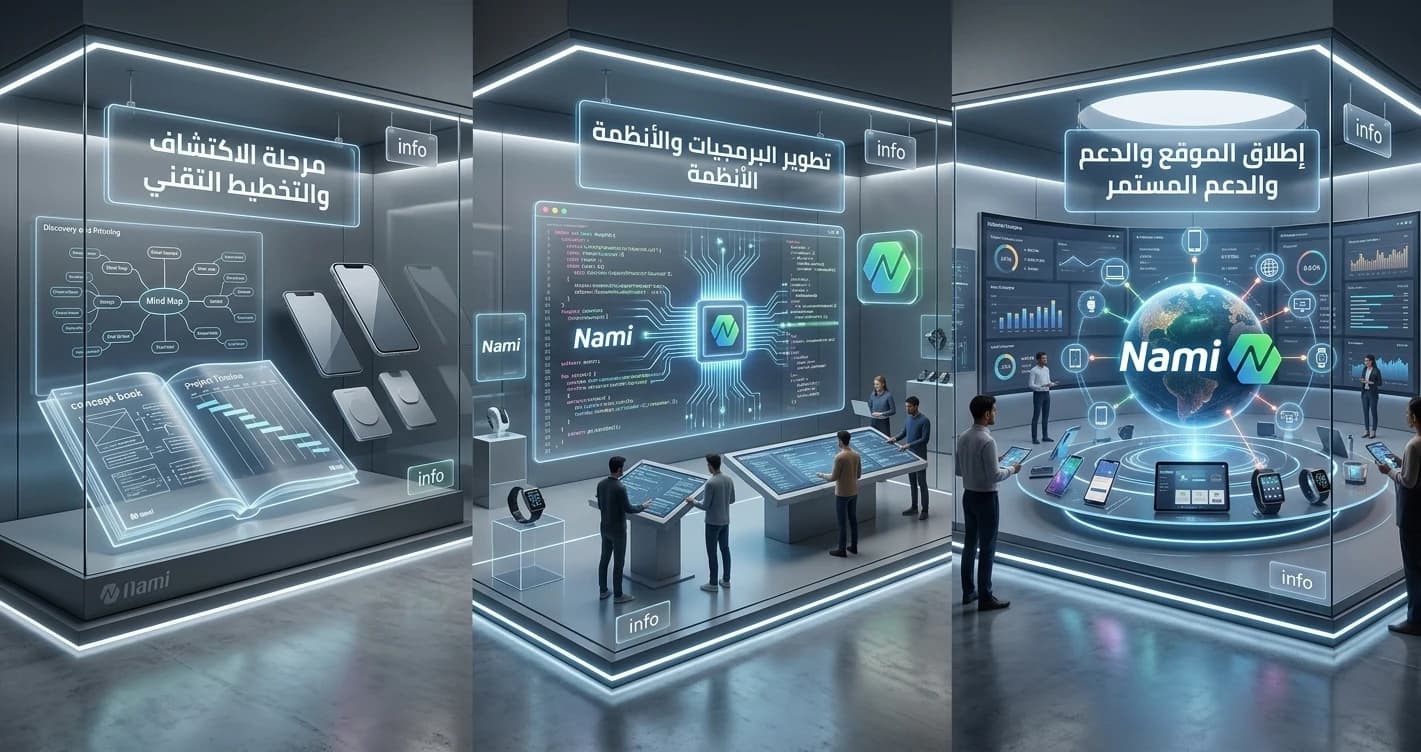
Creating a website involves several interconnected stages. Organizing these stages helps reduce errors and ensures that requirements are clear before moving to the next phase.
1. Requirements Analysis
Define the project’s goals, target audience, required pages, and functionality.
2. Website Structure Planning
Organize pages and sections and determine how users will navigate between them.
3. Interface Design
Prepare the page layouts and arrange elements to match the project’s identity and users’ needs.
4. Programming and Development
Build the interfaces and functionality, connect databases, and implement the required external services.
5. Testing and Review
Check pages, functionality, performance, and compatibility across different devices and browsers.
6. Launch
Set up the hosting, domain, and required configurations to publish the website and make it available to users.
7. Post-Launch Follow-Up
Monitor performance, resolve issues, and make necessary updates according to the project’s needs.
Nami follows a clear project management methodology that begins with defining requirements and agreeing on an implementation plan, while involving the client in key stages such as design approval and reviewing results before launch. Organized communication throughout the project helps align expectations, ensure important decisions are approved on time, and make sure the final website meets the client’s needs and business objectives.
Website Testing and Quality Assurance Before Launch
Website testing aims to identify errors before the website becomes available to the public and ensure that pages and functions work according to the defined requirements.
The testing process covers several areas:
-
Functional testing: Ensure that links, forms, login, search, and ordering functions work correctly.
-
Device and browser testing: Verify that the website displays and functions properly across different environments.
-
Performance testing: Measure page loading speed and identify elements that cause delays.
-
Security testing: Review permissions, settings, and components that may affect data protection.
-
User experience testing: Ensure that content is clear and core functions are easy to access.
-
Integration testing: Verify that payment, shipping, or connected systems work properly when applicable.
It is best to prepare a list of requirements and tests before launch, resolve any identified issues, and retest the affected components.
Factors Affecting Website Development Time
Website development time varies according to the project’s size and complexity. An accurate timeline cannot be determined without understanding the requirements and functionality to be implemented.
The main factors affecting development time include:
-
Website size: The number of pages and sections and the amount of content required.
-
Level of customization: The time needed to develop custom designs and features.
-
External integrations: Such as payment gateways, shipping systems, and customer management tools.
-
Content preparation: How ready the text, images, and data are before work begins.
-
Decision-making speed: The time needed to review designs and approve project stages.
-
Testing: The number of features that need to be checked and tested before launch.
-
Changes during development: Modifications that fall outside the agreed scope of work.
Defining the scope of work from the beginning and establishing clear review stages help reduce delays and improve time and resource management.
Website Development Cost in Egypt and Factors That Determine Pricing
The cost of website development in Egypt varies according to the website type, project size, and required features. As a general estimate, typical prices in the Egyptian market range between:
-
Simple landing page: EGP 5,000–15,000.
-
Corporate website: EGP 10,000–35,000.
-
E-commerce store: EGP 20,000–80,000 or more.
-
Custom platform or system: EGP 50,000–150,000 or more.
These prices are indicative and may vary depending on the company and project requirements. Hosting and maintenance may also be charged separately.
The cost is affected by the following factors:
-
Website type: A corporate website has different requirements from an e-commerce store or custom platform.
-
Number of pages: More pages and sections may require additional design and development time.
-
Custom design: Creating unique interfaces may require more resources than using a ready-made template.
-
Software functionality: Such as user accounts, bookings, dashboards, and order management.
-
Integrations: Connecting the website to payment and shipping services or internal systems.
-
Languages: Supporting multiple languages may require preparing content and configuring interfaces and functionality for each language.
-
Hosting and domain: Choosing the appropriate infrastructure to run the website.
-
Maintenance and support: Services required after launch and their associated costs.
To obtain a suitable estimate, request a quotation that specifies the scope of work, included features, implementation timeline, and operating and maintenance costs. When comparing website development companies in Egypt, compare the actual services and quality of execution, not just the total price.
Website Maintenance and Data Protection After Launch
Website maintenance helps preserve stability, resolve issues, and reduce technical risks as the website continues to be used.
Essential maintenance tasks include:
-
Software updates: Update the content management system, plugins, and other components.
-
Backups: Create regular backups and test whether they can be restored.
-
Performance monitoring: Track website speed, resource usage, and technical errors.
-
Data protection: Manage user permissions and secure accounts and login credentials.
-
Troubleshooting: Resolve issues that affect pages or functionality.
-
Content updates: Modify information, services, and prices when needed.
-
Security reviews: Check settings, address known vulnerabilities, and apply appropriate updates.
Before signing a contract, define the scope of maintenance, support period, response time, and any additional costs to ensure the company’s responsibilities are clear after the website is delivered.
Website Development to Support Business Growth and Expansion
A website may need further development as a business grows and customer needs change, whether to add new services, improve performance, or simplify digital operations.
Common situations that may require website development include:
-
Adding new services: Updating pages and sections to reflect business expansion.
-
Improving user experience: Making navigation and access to information and services easier.
-
Adding new features: Such as bookings, account management, and order tracking.
-
System integration: Connecting the website with customer management or inventory systems.
-
Improving performance: Handling an increase in visitors and orders efficiently.
-
Updating the design: Keeping up with changes in brand identity and audience needs.
Development begins by evaluating the current website and identifying the improvements needed according to the company’s goals and budget. Nami provides a range of integrated digital services that help businesses develop their websites and applications and benefit from suitable technical and marketing solutions, supporting business growth and evolving future needs.
Why Choose Nami for Your Digital Project?
Nami has more than 9 years of experience in programming and digital solutions, providing services that help businesses build a professional digital presence and develop their operations according to their needs and goals.
Some of Nami’s key advantages include:
-
Diverse technical expertise: Delivering digital projects that suit the needs of different businesses and industries.
-
Custom development: Building websites and systems that match each project’s requirements and business operations.
-
Integrated digital solutions: Including website development, mobile applications, design, technical consulting, and cloud services, in addition to digital marketing services that help businesses strengthen their digital presence and reach their target audience.
-
Focus on user experience: Designing easy-to-use interfaces that suit the project’s identity and audience needs.
-
A clear work plan: Defining implementation stages and communicating with the client at key points to review and approve results.
-
Technical support and maintenance: Helping maintain website performance after launch.
Nami’s experience is reflected not only in the services it offers but also in the variety of projects it has completed. You can explore Nami’s portfolio and review examples of real projects to learn more about the quality of execution and the solutions it delivers.
With Nami, you can turn your idea into an integrated digital solution that helps develop your business and strengthen your presence in the market.
Start Your Website Project with Nami
Building a successful website starts with setting clear goals, choosing the features your business needs, and planning for the budget, timeline, and future maintenance.
Before starting the project, prepare a brief description of your business, target audience, required pages and features, and any systems you want to connect to the website. This information helps assess the project’s needs and discuss the scope of work more clearly.
You can contact Nami to discuss your project and explore solutions that meet its requirements, whether you want to build a new website or develop your existing one.